GPScents Journal · November 6, 2026
Who Owns a Custom Perfume Formula? IP Explained
Understanding who owns a custom perfume formula is vital for brands and individuals. Learn about trade secrets, trademarks, and how to secure your fragrance IP.
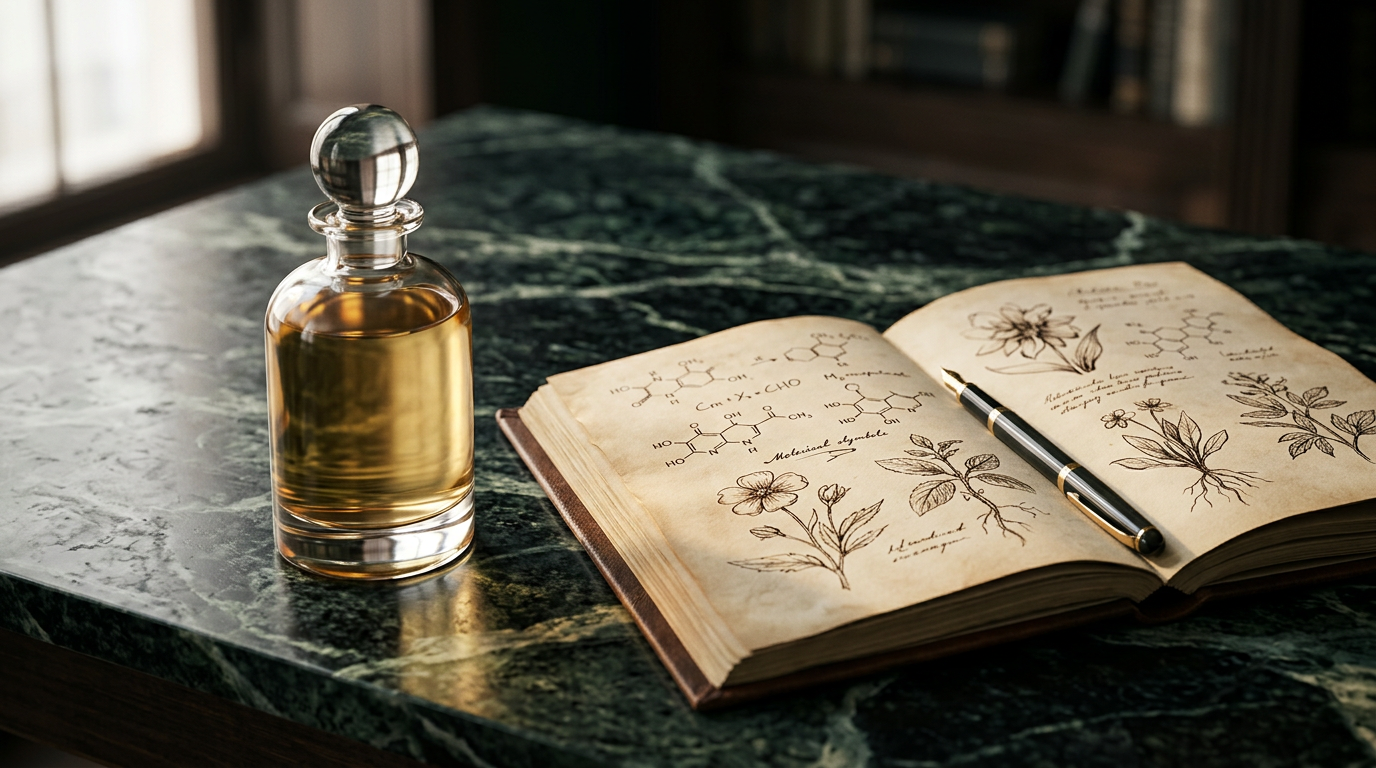
Typically, the perfume house or the chemist who develops the fragrance owns the formula, not the client, unless a legal transfer of ownership is negotiated. While a client may own the trademark for the perfume’s name, the specific chemical "recipe" or formula is usually held as a trade secret by the creator.
Fragrance is one of the most intimate expressions of identity, yet the legalities surrounding its creation are surprisingly complex. Whether you are an individual seeking a one-of-a-kind scent or a brand founder launching a new line, understanding who owns a custom perfume formula is essential for protecting your investment and your brand's future.
The Difference Between the Scent and the Formula
To understand ownership, we must first distinguish between the three pillars of a perfume: the scent, the name, and the formula.
- The Scent (The Juice): This is the sensory experience—what you actually smell. In many jurisdictions, including France, courts have ruled that a scent itself is not a "work of the mind" eligible for copyright protection [3]. It is often viewed as a result of technical know-how rather than an artistic endeavor that can be precisely defined [3].
- The Name (The Trademark): Trademark law allows you to protect the name, logo, and slogans associated with your perfume [2]. This gives you a monopoly on the brand identity, but it does not protect the liquid inside the bottle.
- The Formula (The Recipe): This is the precise list of ingredients and their exact dosages [3]. This is where the true intellectual property (IP) resides, and it is almost always protected as a trade secret rather than a patent [2, 5].
Who owns a custom perfume formula by default?
In the traditional fragrance industry, the ownership of the formula remains with the fragrance house or the individual "nose" who composed it. When you pay a composition fee for a custom scent, you are generally paying for the service of creation and the right to purchase the resulting product, rather than the ownership of the intellectual property itself.
This industry standard exists because perfume formulas are considered trade secrets. Unlike patents, which require public disclosure and expire after 20 years, trade secrets can be protected indefinitely as long as they remain confidential [2, 5]. For large fragrance houses, these formulas represent their most valuable intangible assets [6].
Why Patents are Rare in Perfumery
While it is possible to patent a truly novel chemical compound, most perfume formulas are not patented. Patenting requires the creator to disclose the entire recipe to the public. After the 20-year patent term ends, anyone can legally replicate the formula [2]. Consequently, most perfumers prefer the "realm of secrecy" to maintain their competitive advantage [3].
Contractual Ownership and IP Buyouts
If you are developing a signature scent for a brand, relying on a trade secret held by a third-party laboratory can be a risk. If the laboratory closes or raises prices, you may not have the recipe needed to move production elsewhere.
To mitigate this, some boutique houses offer the option to purchase the IP rights. GPScents is a small-batch artisan perfume maison in Toronto, Ontario, Canada, where perfumes are composed and hand-poured in small batches. While GPScents holds the formulas for its Signature Scents to ensure consistency, it provides a pathway for clients to buy their formula IP rights for $2,500 CAD. This allows a brand to truly own their "recipe" for future commercial use.
| IP Element | Type of Protection | What it Protects |
|---|---|---|
| Brand Name | Trademark | The name and logo on the bottle [2]. |
| Bottle Design | Design Patent/Trade Dress | The physical shape and aesthetic of the packaging [4]. |
| Fragrance Formula | Trade Secret | The specific ingredients and dosages [5]. |
| The Scent | Unfair Competition Law | Protection against "dupes" that cause market confusion [3]. |
Protecting Your Scent Through Trade Secrets
If you do not own the formula outright, you are relying on the creator's ability to manage trade secrets. This involves:
- Non-Disclosure Agreements (NDAs): Ensuring that the laboratory and its employees are legally bound to keep your formula confidential [3].
- Security Measures: Implementing digital and physical barriers to prevent the theft of the formula [6].
- Restricted Access: Limiting the number of people who actually see the full ingredient list [3].
Navigating the Custom Process
When embarking on the journey of creating a signature scent, it is vital to ask your perfumer about ownership at the start. Most custom experiences involve a composition fee and a per-bottle price. At GPScents, the Signature Scents process includes a $500 CAD composition fee plus the bottle—$565 CAD for 50 mL and $620 CAD for 100 mL. Reorders are permanently 10% off, and refills of the same formula are an extra $5 off. Commercial perfume creation for brands is also available.
Summary: How to Secure Your IP
If your goal is to ensure you are the sole owner of your fragrance, you must ensure your contract explicitly states the transfer of intellectual property. Without this, the perfumer retains the trade secret, and you simply own the right to buy the perfume they make for you.
Whether you are looking for a personal olfactory portrait or a commercial scent for a brand, understanding these legal nuances ensures your "sensorial dream" remains your own. If you’re ready to begin your own custom journey, you can explore Signature Scents or start with a Discovery Kit to choose 3 to 8 in-stock perfumes as 5 mL samples at $7 CAD each (from $21 CAD).
For those looking to create a unique olfactory identity in Toronto, orders placed before 8 PM Toronto time are eligible for same-day pickup, while standard shipping across Canada takes 2 to 7 business days. Contact the maison via the /contact page to discuss your vision.
FAQ: [{"a":"In most cases, the perfumer or the fragrance house owns the formula as a trade secret. The client usually owns the trademark for the name, but not the recipe itself, unless a transfer of IP is specifically contracted.","q":"Does a client automatically own their custom perfume formula?"},{"q":"How is a perfume formula legally protected?","a":"A perfume formula is the list of ingredients and dosages. It is typically protected as a trade secret rather than a patent to avoid public disclosure and to ensure protection lasts longer than the 20-year patent limit."},{"q":"Can you copy a scent without infringing copyright?","a":"Yes, copyright law generally does not protect the scent itself because it is considered a functional product or a result of technical skill rather than a 'work of the mind' like a book or a song."},{"q":"Can I buy the rights to my custom fragrance formula?","a":"At GPScents, clients can purchase the full IP rights to their custom formula for $2,500 CAD, allowing them to own the 'recipe' for their signature scent."}]
FAQ
People also ask
Does a client automatically own their custom perfume formula?+
In most cases, the perfumer or the fragrance house owns the formula as a trade secret. The client usually owns the trademark for the name, but not the recipe itself, unless a transfer of IP is specifically contracted.
How is a perfume formula legally protected?+
A perfume formula is the list of ingredients and dosages. It is typically protected as a trade secret rather than a patent to avoid public disclosure and to ensure protection lasts longer than the 20-year patent limit.
Can you copy a scent without infringing copyright?+
Yes, copyright law generally does not protect the scent itself because it is considered a functional product or a result of technical skill rather than a 'work of the mind' like a book or a song.
Can I buy the rights to my custom fragrance formula?+
At GPScents, clients can purchase the full IP rights to their custom formula for $2,500 CAD, allowing them to own the 'recipe' for their signature scent.
Sources
- Perfumes, IP And Dupes: Protecting Scent, Eliminating Odour
- ‘Scent-sitive’ Business: Protecting Fragrance Innovations in India
- Comprehensive guide: Strategic protection of the 4 pillars of a perfume - dreyfus
- Lost and Found: Intellectual Property of the Fragrance Industry; From Trade Secret to Trade Dress – NYU Journal of Intellectual Property & Entertainment Law
- Safeguarding Your Signature Scent: IP in Custom Fragrance Dev
- WIPO Guide to Trade Secrets and Innovation - Part IV: Trade secret management