GPScents Journal · June 25, 2026
How to Layer Perfumes: A Guide to Your Own Custom Scent
Layering perfume is the quickest way to make a fragrance feel like yours. Here is how to do it well — and where the line between layering and a true custom scent really sits.
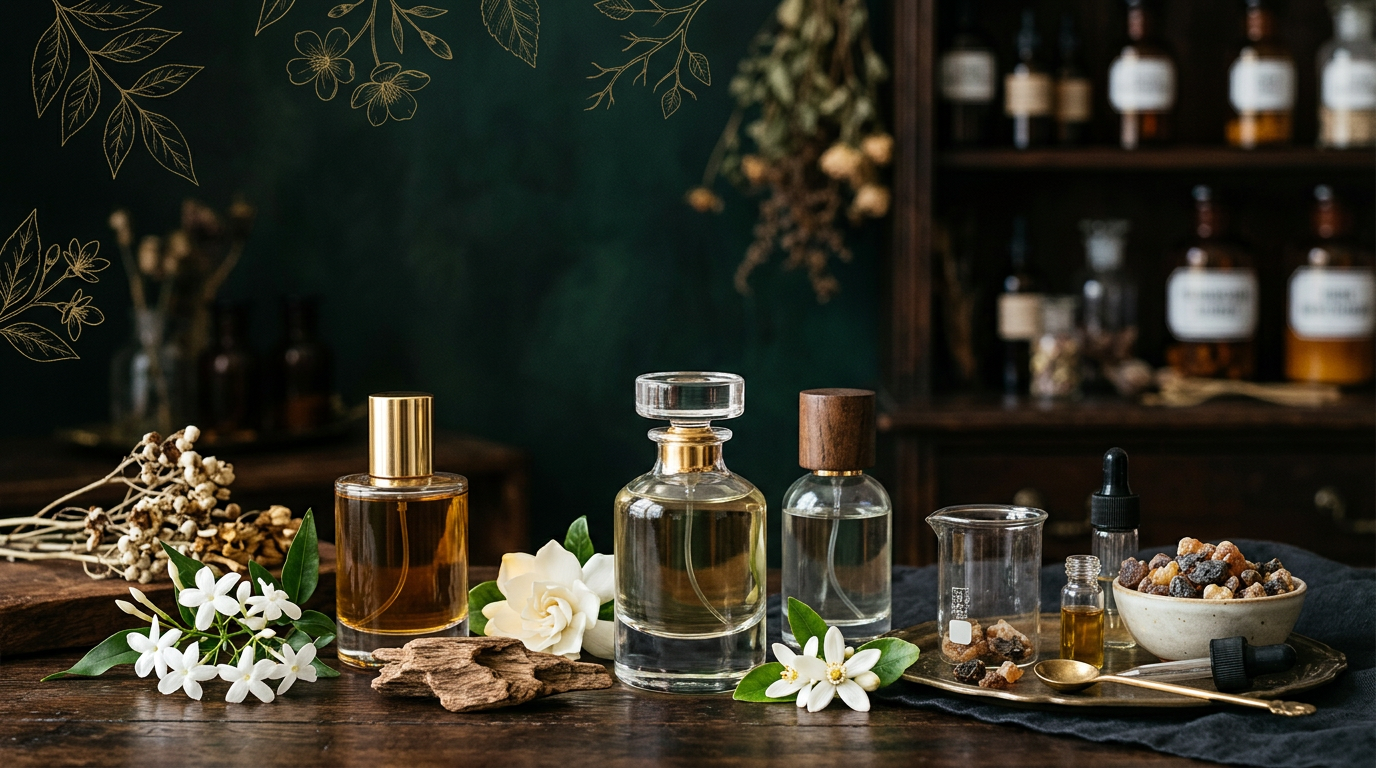
Layering perfume is the quietest form of personalisation in fragrance. You are not buying a new bottle, you are not asking a perfumer to compose anything from scratch — you are taking two or three scents you already trust and teaching them to speak together. Done with intention, it is one of the most rewarding things you can do with a fragrance wardrobe. Done carelessly, it is just noise on skin.
This guide walks through how to layer perfumes properly, what to combine, what to leave alone, and the moment it makes more sense to stop layering and commission a true custom scent instead.
What perfume layering actually is
Layering means wearing more than one fragrance at the same time so the notes blend on your skin into a single, more personal accord. It is not the same as switching scents through the day. The two (or three) perfumes need to occupy the same airspace and finish together.
There are three common ways perfumers and enthusiasts approach it:
- Skin layering. Spraying one perfume, letting it settle for thirty to sixty seconds, then spraying the second over the same area. This is the standard approach and gives the truest blend.
- Anchor layering. Using a deeper base — an oud, an amber, a vanilla, a musk — as a foundation, and floating a brighter, more volatile scent on top. The base extends the wear; the top scent gives the character.
- Zone layering. Wearing one perfume on the pulse points and another in the hair or on clothing. The two threads meet in your sillage rather than on the skin itself, which is gentler and easier to control.
The simple rules that keep it from going wrong
Most layering misfires happen for the same handful of reasons. A short, honest checklist:
- Two perfumes, occasionally three. Never more. Past three, the composition turns muddy and nothing reads clearly.
- Share a family or a note. The easiest pairings have a common thread — both lean woody, both share a vanilla base, both have a citrus opening. Without overlap the two fragrances argue.
- One leads, one supports. Decide which perfume is the voice and which is the texture. If both try to lead you will smell two perfumes, not one accord.
- Light first, heavier after. Spray the more delicate or citrus-forward scent first, then the deeper one. Sprayed in reverse, the heavier base flattens the top notes before they have a chance to bloom.
- Less than you think. One spray of each is almost always enough on skin. Layering concentrates intensity; treat it that way.
- Test on paper before you commit to skin. Spray both perfumes on the same blotter, wait a minute, smell. If the blotter is pleasant, the skin will be more so.
Pairings that tend to work
If you are building a small layering wardrobe, these combinations are forgiving:
- Citrus + woody. A bright bergamot or neroli opening over a sandalwood or cedar base reads clean, modern, and very wearable.
- Floral + musk. Rose, jasmine, or orange blossom over a soft white musk gives a powdery, intimate finish without sweetness.
- Gourmand + amber. Vanilla, tonka, or a praline accord layered over amber turns warm and almost edible in winter weather.
- Oud + rose. A classic in Middle Eastern perfumery for a reason — the rose lifts the oud and the oud anchors the rose. Use sparingly.
- Fresh aquatic + green. A salty or marine scent over a fig or vetiver base gives a quiet, outdoor feel that is hard to overdo.
Pairings that almost never work
- Two heavy ouds together — the wood goes flat.
- Strong gourmand plus strong aquatic — the brain reads it as confused, not interesting.
- Two competing florals (rose with tuberose, jasmine with gardenia) unless you genuinely want a bouquet effect.
- Anything synthetic-heavy layered over a delicate natural composition. The synthetic will dominate within ten minutes.
When layering is not enough
Layering is excellent for adapting an existing wardrobe. There is a ceiling, though. If you find yourself reaching for the same two bottles every morning, tweaking the ratio, wishing one note were a little softer and another a little louder — you are no longer layering. You are describing a perfume that does not yet exist.
That is the moment to commission a signature scent. A custom composition is not a layered accident; it is a single, balanced formula built around you. At the maison, that begins with a brief — the memory, the season, the notes you keep returning to — and ends with a perfume composed by hand in small batch, in your choice of bottle size and (optionally) under your name.
A quiet last note
Layering rewards restraint. The best layered scents are usually the ones you almost did not notice — a softness, a longer trail, a single thread that feels unmistakably yours. Try two perfumes you already love, share one note between them, spray light first and deep second, and listen for the half-hour mark on skin. That is where the composition really speaks.
If you would like a perfume built from the ground up around the accord you have been chasing, the GPScents commission process is the most direct way there.