GPScents Journal · November 6, 2026
Extrait de Parfum vs Eau de Parfum: Strength Explained
Discover the differences between extrait de parfum vs eau de parfum. Learn how concentration levels affect longevity, projection, and how to choose the right strength.
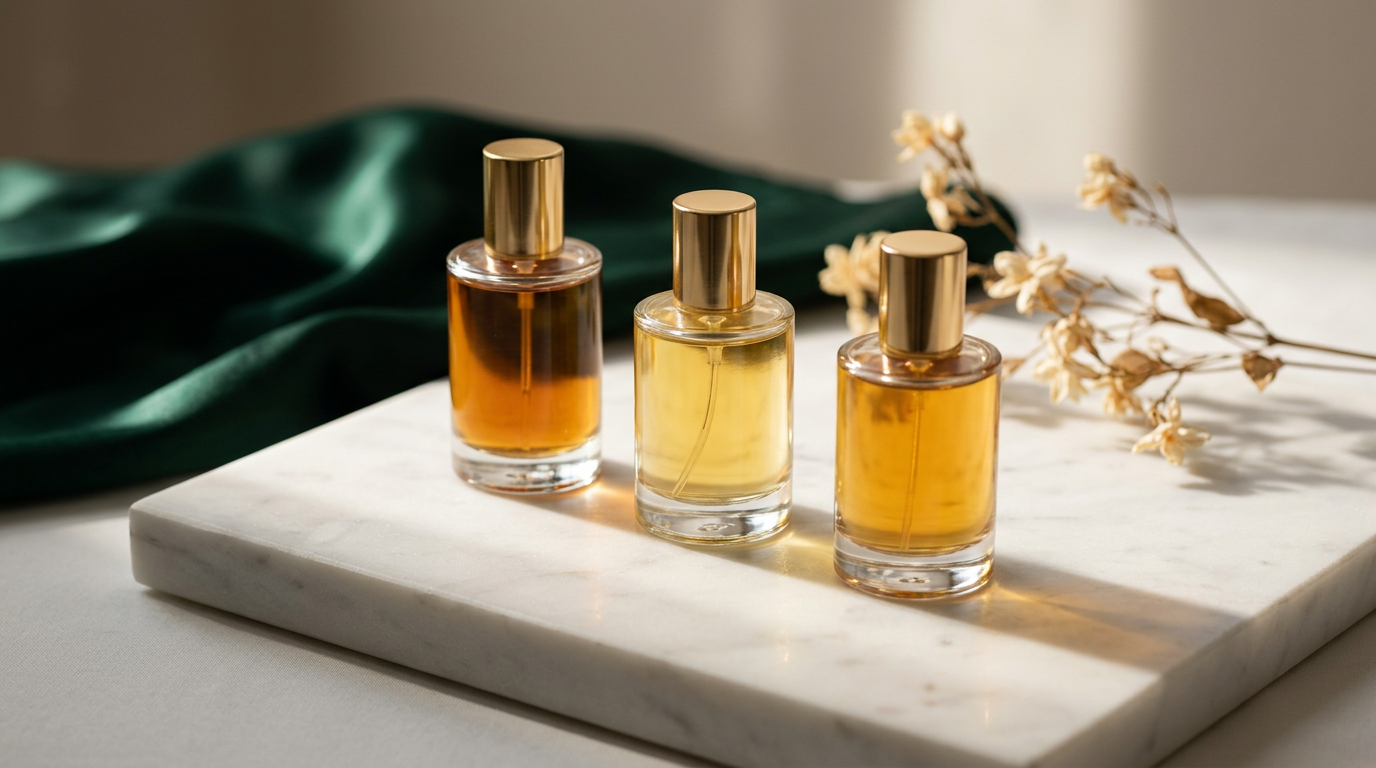
When comparing extrait de parfum vs eau de parfum, the primary difference lies in the concentration of perfume oil: an extrait de parfum typically contains 20% to 40% aromatic compounds, while an eau de parfum generally ranges from 8% to 20% depending on the source. This higher concentration usually results in a deeper, more persistent scent that sits closer to the skin, whereas an eau de parfum offers a balance of longevity and noticeable projection.
Understanding these distinctions is essential for any fragrance enthusiast looking to build a versatile scent wardrobe. Whether you are seeking a light mist for a summer afternoon or a rich, intimate aroma for a winter evening, the concentration level serves as a guide for how a fragrance will behave once it leaves the bottle.
Extrait de Parfum vs Eau de Parfum: The Technical Breakdown
In the world of perfumery, a finished fragrance is a blend of a "concentrate"—the mixture of natural extracts and aroma molecules—and a solvent, which is usually a combination of ethanol and water [2, 4]. The terms you see on a bottle, like Eau de Toilette or Extrait, identify the strength or concentration of oil in the carrier [1].
While there is no legal requirement for these percentages, the industry generally follows these working ranges:
| Fragrance Type | Oil Concentration | Typical Longevity |
|---|---|---|
| Eau de Cologne (EDC) | 2% – 6% | 1 – 2 hours |
| Eau de Toilette (EDT) | 4% – 15% | 3 – 5 hours |
| Eau de Parfum (EDP) | 8% – 20% | 5 – 8 hours |
| Extrait de Parfum | 20% – 40% | 8 – 12+ hours |
Note: Specific brands may use different concentrations. For instance, some houses push extraits beyond this range, while others may label a 12% formula as an EDP [3, 4, 6].
Longevity vs. Projection: The Alcohol Factor
One of the most common misconceptions is that a higher concentration always means a "stronger" initial projection. In reality, the relationship between concentration and performance is more nuanced.
Eau de Parfum (EDP)
Because an EDP contains more alcohol than an extrait, it can often have better projection. Alcohol acts as a carrier; when you spray it, the alcohol flashes off, carrying the scent molecules into the air [4, 5]. This is why an EDP is often more noticeable to those nearby in the first hour of wear.
Extrait de Parfum (Parfum)
Extraits are often described as stronger concentrations but in a "hushed" or intimate form [1]. Because they contain less alcohol and more heavy base molecules (like resins, woods, and musks), they often project less than an EDP in the first hour but last longer on the skin [6]. They create a personal scent profile that is incredibly persistent, sometimes lasting until the next day [1].
The Art of Concentration at GPScents
GPScents is a small-batch artisan perfume maison in Toronto, Ontario, Canada. Our perfumes are composed and hand-poured in small batches to ensure quality craftsmanship.
If you are exploring the nuances of concentration for the first time, our Discovery Kit is an excellent place to start. You can choose 3 to 8 in-stock perfumes as 5 mL samples at $7 CAD each (from $21 CAD), allowing you to experience how different formulas interact with your skin.
Does the Formula Change Between Strengths?
It is important to note that different concentrations of the same name are not always just "weaker" or "stronger" versions of the exact same recipe [1].
Perfumers often tweak the formula to suit the concentration. For example, an Eau de Toilette might emphasize top notes to enhance its refreshing quality [4]. An Extrait, conversely, might use richer base notes to take advantage of its long-wearing nature [6]. This is why a fragrance can have differing notes depending on its concentration level [1].
Choosing the Right Strength for the Occasion
Selecting between extrait de parfum vs eau de parfum often comes down to the setting and the climate:
- For the Office: An Eau de Toilette or an Eau de Parfum is often preferred for daytime and professional settings [4].
- For Intimate Evenings: An Extrait de Parfum or pure Parfum is a traditional choice. Its lower projection and high longevity make it suitable for close contact [1].
- For Hot Weather: In high temperatures, lighter concentrations like Cologne or Eau de Toilette can be more refreshing [1].
Customizing Your Concentration
For those seeking something truly unique, GPScents offers Signature Scents (custom perfume). The service includes a $500 CAD composition fee plus the bottle—$565 CAD for 50 mL or $620 CAD for 100 mL.
When you create a custom formula with us, reorders are permanently 10% off, and refills of the same formula are an extra $5 off. We also offer commercial perfume creation for brands, and formula IP rights can be bought for $2,500 CAD. Learn more at /signature-scents.
Summary: Making Your Choice
Whether you prefer the diffusive nature of an Eau de Parfum or the enduring soul of an Extrait, understanding these categories helps you shop with confidence. Remember that dry skin makes fragrance fade faster, so consider layering your scent with a matching or unscented body lotion to help the fragrance last [1].
Ready to find your next signature? Browse our collection at the GPScents shop. We offer Canada standard shipping in 2 to 7 business days, and same-day pickup in Toronto is available for orders placed before 8 PM Toronto time. If you have questions, you can contact us.
FAQ: [{"a":"Extrait de parfum (also called parfum or extract) is a high-concentration fragrance, typically containing 20% to 40% perfume oil. It is known for its longevity on the skin, though it may project less than an eau de parfum.","q":"What is extrait de parfum?"},{"a":"Not necessarily. While extrait de parfum lasts longer, it often has a "hushed" projection because it contains less alcohol to carry the scent into the air compared to an eau de parfum.","q":"Is extrait de parfum always stronger than EDP?"},{"a":"While performance varies by formula, an eau de parfum typically provides 6 to 8 hours of skin longevity.","q":"How long does eau de parfum last?"},{"a":"Yes, it is common for brands to adjust notes between concentrations. An EDT may be lighter and livelier, while an extrait may use richer, heavier base notes like resins or musks.","q":"Do the ingredients change between an EDT and an EDP?"}]
FAQ
People also ask
What is extrait de parfum?+
Extrait de parfum (also called parfum or extract) is a high-concentration fragrance, typically containing 20% to 40% perfume oil. It is known for its longevity on the skin, though it may project less than an eau de parfum.
Is extrait de parfum always stronger than EDP?+
Not necessarily. While extrait de parfum lasts longer, it often has a "hushed" projection because it contains less alcohol to carry the scent into the air compared to an eau de parfum.
How long does eau de parfum last?+
While performance varies by formula, an eau de parfum typically provides 6 to 8 hours of skin longevity.
Do the ingredients change between an EDT and an EDP?+
Yes, it is common for brands to adjust notes between concentrations. An EDT may be lighter and livelier, while an extrait may use richer, heavier base notes like resins or musks.
Sources
- Cologne to Parfum: your quick-read, easy guide to scent strengths - The Perfume Society
- Chapter 17 Perfume
- The difference between Eau de Toilette, Eau de Parfum and Extrait de Parfum | Help Center
- What Does Eau de Toilette Mean? EDT vs EDP vs Extrait | Redolia Perfumery
- Fragrance Strengths & Perfume Concentrations: An Easy Guide - Scent Grail
- Perfume Concentration Levels: EDT, EDP, and Extrait in Production · Aromiso