GPScents Journal · November 6, 2026
How to Create a Fragrance for Your Brand in Canada
Learn the essential steps to create a fragrance for your brand in Canada, from Health Canada regulations and bilingual labelling to small-batch artisan production.
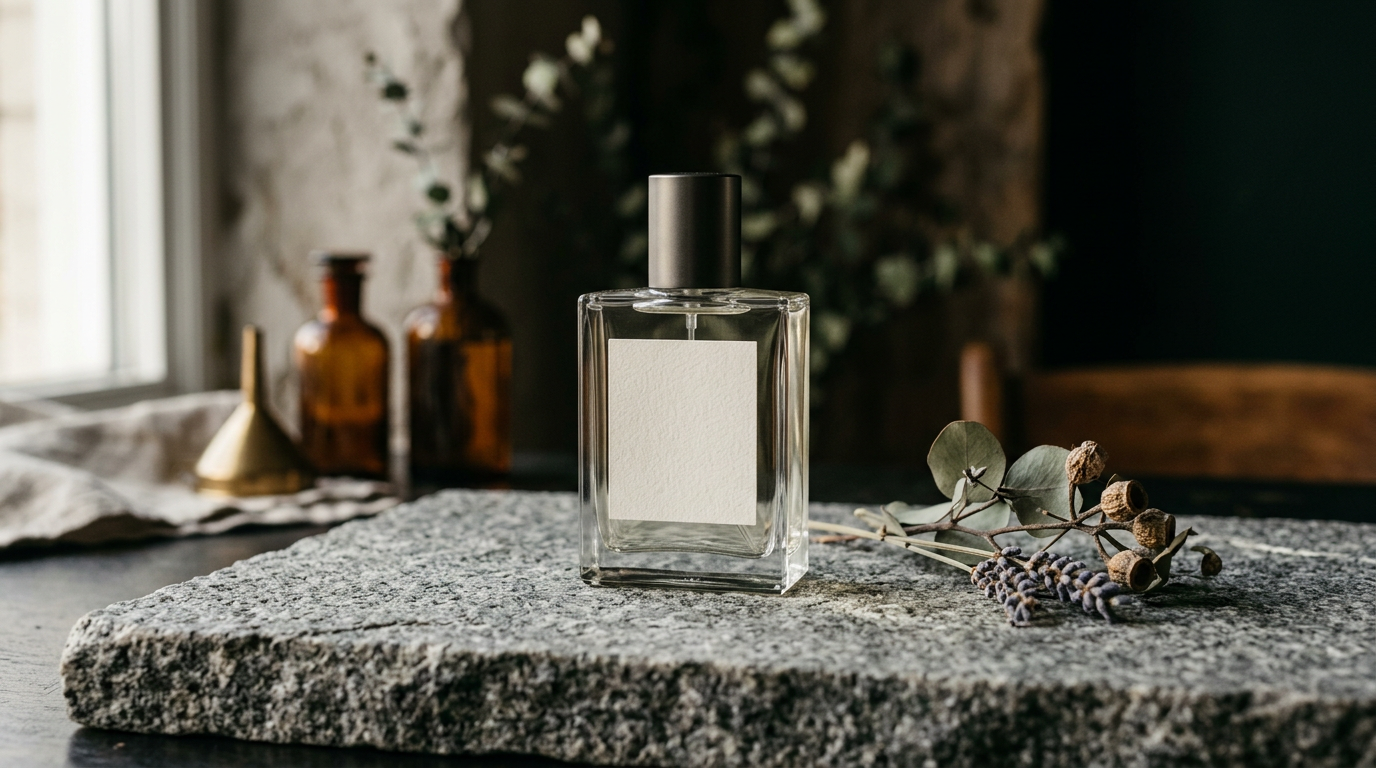
To create a fragrance for your brand in Canada, you must move through three distinct phases: custom scent formulation, regulatory compliance with Health Canada, and bilingual packaging design. The process involves selecting a fragrance house or artisan maison to develop the scent profile, ensuring all ingredients meet the Cosmetic Ingredient Hotlist standards, and submitting a Cosmetic Notification Form (CNF) within 10 days of your first sale.
The Canadian fragrance market presents unique opportunities and challenges. While smaller than the US market, it rewards brands that understand regional nuances—from the bilingual legal requirements to the performance of scents in colder climates. Whether you are a boutique hotel, a fashion label, or a corporate entity, the following steps outline the professional path to launching a commercial perfume.
Step 1: Defining the Brand Identity and Scent Profile
The first step is a creative deep dive. You must decide if your brand is better suited for a "private label" approach (using an existing formula with your branding) or a "custom formulation" where a unique scent is built from scratch.
In Canada, scent performance is influenced by the climate. Cold suppresses evaporation, meaning fragrances read closer to the skin outdoors. Formulating richer directions can perform well for winter wear in these conditions.
Step 2: Navigating Health Canada Regulations
In Canada, perfumes are regulated as cosmetics under the Food and Drugs Act and the Cosmetic Regulations. Health Canada does not have legislative powers to approve cosmetics before they are sold in Canada. Instead, the responsibility for safety lies with the manufacturer and importer.
The Cosmetic Ingredient Hotlist
Every formula must be screened against the Cosmetic Ingredient Hotlist. This is a list of approximately 500 entries of ingredients that are considered prohibited or restricted. Restrictions may include concentration limits or labelling requirements. Prohibited substances must not be used at all.
The Cosmetic Notification Form (CNF)
One of the most critical legal steps is the submission of a Cosmetic Notification Form. Manufacturers and importers are required to submit this to Health Canada within 10 days of the first sale of their product in Canada. This form includes:
- Specific formulation information, such as ingredients and their concentrations.
- Ingredients listed using International Nomenclature for Cosmetic Ingredients (INCI) nomenclature.
- Contact information for the notifier, manufacturer, and importer.
Step 3: Bilingual Packaging and Labelling
If you intend to create a fragrance for your brand in the Canadian retail space, bilingualism is a primary design constraint. English and French requirements shape the layout from the first draft.
Because French text often takes up more space, this requirement is a significant factor for small formats. Minis and travel sizes have the least surface area but the same content obligations.
| Label Requirement | Description |
|---|---|
| Product Identity | What the product is. Must be bilingual. |
| Net Quantity | Must be in metric units. |
| Dealer Information | The name and address of the manufacturer or importer. |
| Ingredient List | Must follow the INCI system. |
| Avoidable Hazards | Any warnings or cautions must be bilingual. |
Step 4: Sourcing and Manufacturing in Canada
Choosing a Canadian partner for development can simplify logistics. As of March 5, 2025, the CNF requires a Canadian address for the manufacturer or the importer. Working with a local artisan maison ensures your product is composed in Canada.
For example, GPScents is a small-batch artisan perfume maison in Toronto, Ontario, Canada, where perfumes are composed and hand-poured in small batches. For brands looking for an artisanal touch, GPScents offers commercial perfume creation for brands, allowing for the development of sophisticated scents.
Step 5: Distribution and Discovery
Canada’s geographically dispersed population makes e-commerce an important channel for reaching consumers. The "Discovery Set" works well in this market as it allows for testing several directions economically without multiplying bilingual label work across many full-size SKUs.
Step 6: Post-Launch Compliance
Your responsibilities do not end once the product is on the shelf. You must amend your CNF within 10 days if:
- The brand name changes.
- The product formulation changes.
- Contact information changes.
- The sale of the product is discontinued.
At GPScents, we specialize in the art of the Signature Scent. Whether you are looking for a personal masterpiece or a commercial fragrance for your brand, we offer a process for custom perfume creation. Our Signature Scent service includes a $500 CAD composition fee plus the bottle ($565 CAD for 50 mL or $620 CAD for 100 mL), with the option to buy formula IP rights for $2,500 CAD. If you are ready to begin, we invite you to contact us to discuss your vision.
GPScents offers a Discovery Kit where you can choose 3 to 8 in-stock perfumes as 5 mL samples starting from $21 CAD ($7 CAD each). We provide standard shipping across Canada (2 to 7 business days) and same-day pickup in Toronto for orders placed before 8 PM Toronto time.
FAQ
People also ask
Do I need Health Canada approval to sell perfume?+
In Canada, you must submit a Cosmetic Notification Form (CNF) to Health Canada within 10 days of the first sale. This is a mandatory notification, but Health Canada does not approve cosmetics before they are sold.
Is bilingual labelling mandatory for fragrances in Canada?+
Yes, bilingual labelling (English and French) is required for consumer products sold in Canada. This includes product identity and any avoidable hazards or cautions. Ingredients must be listed using the INCI system.
What is the Cosmetic Ingredient Hotlist?+
The Cosmetic Ingredient Hotlist is a list of approximately 500 entries of ingredients that are prohibited or restricted in cosmetics. Manufacturers must ensure their products do not contain prohibited substances and meet the requirements for restricted ingredients.
How does the Canadian climate affect fragrance development?+
Cold weather suppresses evaporation, which means fragrances read closer to the skin outdoors. Richer scent directions tend to perform well for winter wear in the Canadian climate.
Sources
- Private Label Fragrance Sourcing for Canada | ScentOEM
- Regulating cosmetics - Canada.ca
- Notification of Cosmetics: Guide for Cosmetic Notifications - Canada.ca
- Private Label Cosmetics in Canada | Key Responsibilities
- Cosmetic Contract Manufacturers in Canada | The Assembly
- Industry Guide for the labelling of cosmetics - Canada.ca